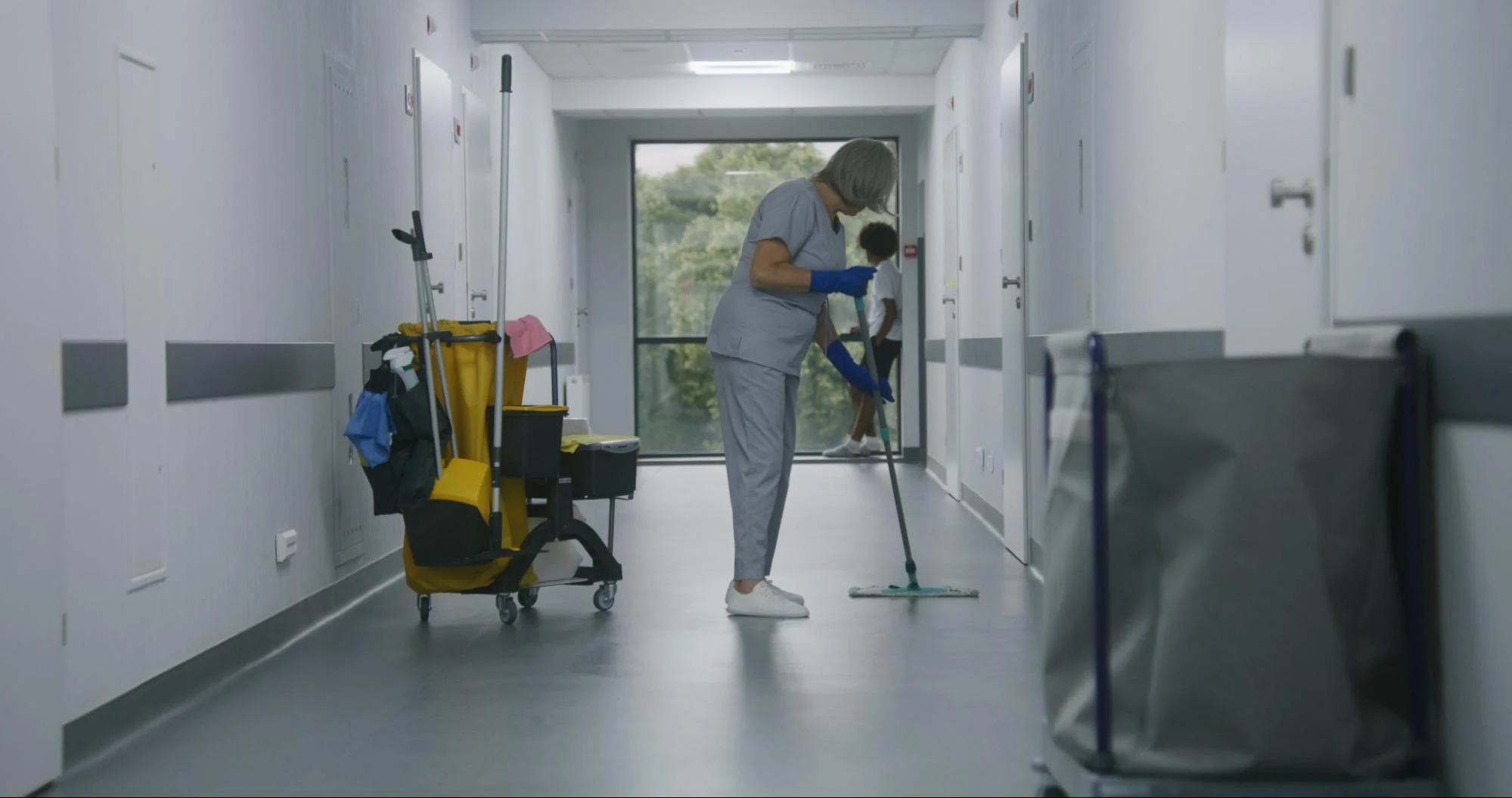
Healthcare facilities in Plano carry a tremendous responsibility. Every day, patients, families, and medical staff rely on these environments to be clean, safe, and free of harmful pathogens. While routine cleaning maintains general appearance and tidiness, terminal cleaning takes facility cleanliness to an entirely different level. It’s one of the most important services a healthcare environment can invest in—and one of the most misunderstood.
Terminal cleaning is not just “deep cleaning.” It is a structured, detailed, and scientifically validated process designed to reduce the spread of infections, protect vulnerable patients, and maintain compliance with strict healthcare regulations. In cities like Plano, where healthcare facilities continue to grow in size and demand, this level of cleaning is essential to maintaining safety and patient trust.
Legacy Business Services provides specialized terminal cleaning services that follow hospital-grade standards, giving healthcare operators confidence that their space meets the cleanliness levels required for safe patient care. In this guide, we break down what terminal cleaning involves, why it is so important for Plano healthcare facilities, and how professional cleaning teams help maintain a safer, healthier environment.
What Exactly Is Terminal Cleaning?
Terminal cleaning is a methodical cleaning and disinfection process performed in healthcare settings to eliminate pathogens that can linger even after routine cleaning. It is typically performed:
-
After a patient is discharged
-
After a patient with a contagious illness leaves a room
-
After surgical procedures
-
In high-risk areas (ICUs, surgical suites, recovery rooms, treatment areas)
-
In response to a contamination event or outbreak
This service goes far beyond wiping down surfaces. It includes:
-
High-touch surface disinfection
-
Detailed cleaning of beds, rails, chairs, and medical equipment
-
Sanitizing door handles, light switches, call buttons, and keyboards
-
Disinfecting walls, floors, and fixtures
-
Safe removal of biohazard materials
-
Following CDC, OSHA, and EPA guidelines
-
Using EPA-registered, hospital-grade disinfectants
-
A structured, step-by-step process to avoid cross-contamination
Every detail is intentional. Terminal cleaning provides a “reset” that ensures patient rooms and medical areas meet strict clinical standards.
Why Terminal Cleaning Is Essential in Plano Healthcare Environments
Plano has seen significant population growth over the past decade, which means more medical offices, surgery centers, specialty clinics, and outpatient facilities. With higher patient volume comes a higher risk of environmental contamination.
Healthcare-associated infections (HAIs) remain a nationwide concern. The CDC estimates that 1 in 31 hospital patients acquires an infection during care each year (reference: https://www.cdc.gov/hai/data/portal/index.html). Many of these infections are preventable with proper cleaning and disinfection.
Terminal cleaning acts as a frontline defense against:
-
Bacteria
-
Viruses
-
Fungi
-
Bloodborne pathogens
-
Antibiotic-resistant organisms (MRSA, C. diff, VRE)
Because medical office buildings and surgery centers in Plano serve a wide range of patients—from routine checkups to specialized care—the environment must be consistently cleaned at a clinical level.
Protecting Patients and Staff From Dangerous Pathogens
Healthcare environments expose people to pathogens that are not commonly encountered in general commercial buildings. Patients may arrive with weakened immune systems or conditions that make them more vulnerable to infections. In these situations, surface cleanliness becomes a vital part of the care process.
Terminal cleaning protects:
Patients
Many illnesses spread through contact with contaminated surfaces. When rooms and equipment are thoroughly disinfected, it significantly reduces transmission risks.
Medical Staff
Doctors, nurses, and caregivers are constantly moving between patient areas. A poorly disinfected workspace increases the chance of carrying pathogens to another area—or home.
Visitors & Families
Family members may not realize how easily pathogens spread. Terminal cleaning ensures that high-traffic zones remain safe for everyone entering the facility.
Reducing Healthcare-Associated Infections (HAIs)
One of the biggest benefits of terminal cleaning is reducing HAIs. These infections often come from:
-
Contaminated surfaces
-
Improperly cleaned medical equipment
-
Inadequate disinfection techniques
-
Cross-contamination
Pathogens like Clostridioides difficile (C. diff) can survive on surfaces for months if not eliminated with the proper disinfectants. Terminal cleaning uses:
-
EPA-registered disinfectants proven to kill these pathogens
-
Strict cleaning sequences
-
Trained professionals who understand clinical cleaning protocols
-
No-touch disinfecting methods when required
By reducing HAIs, hospitals and clinics in Plano see improved patient outcomes and fewer complications during recovery.
Supporting Compliance With Healthcare Standards
Healthcare facilities must meet strict cleaning and safety standards set by:
-
OSHA
-
CDC
-
Joint Commission
-
Texas state health regulations
These guidelines exist to protect the public and ensure medical centers uphold a consistent level of sanitation.
Terminal cleaning helps facilities remain compliant by:
-
Following CDC’s terminal cleaning protocols
-
Using disinfectants approved for healthcare environments
-
Maintaining a documented cleaning process
-
Reducing liability associated with sanitation failures
-
Ensuring rooms are properly disinfected before reuse
Compliance isn’t optional—it’s a requirement. Professional terminal cleaning ensures Plano facilities stay aligned with regulatory expectations year-round.
High-Touch Surfaces: Why They Matter More Than You Think
Healthcare studies have shown that pathogens often thrive on high-touch surfaces such as:
-
Bed rails
-
Call buttons
-
Door handles
-
Computer keyboards
-
Touchscreen devices
-
Faucet handles
-
Light switches
According to the CDC, these surfaces can transmit pathogens for hours—or even days—after initial contact.
Terminal cleaning targets these surfaces with precision, ensuring they receive appropriate dwell time (the amount of time disinfectant must remain wet to be effective). This level of detail is often missed during general cleaning.
The Role of Technology in Terminal Cleaning
Modern terminal cleaning often incorporates advanced tools and technologies that improve accuracy and safety. Some facilities choose:
-
Electrostatic sprayers for full-surface coverage
-
UV-C disinfection systems in high-risk zones
-
Microfiber cloths with superior pathogen capture
-
ATP testing to verify cleanliness
Legacy Business Services stays up-to-date on the tools that help Plano healthcare environments maintain clean, safe patient areas.
These technologies complement—not replace—manual cleaning. When combined, they provide a stronger barrier against contamination.
Preventing Cross-Contamination
Cross-contamination occurs when pathogens spread from one area to another through:
-
Improper cleaning sequences
-
Dirty tools or cloths
-
Untrained cleaning staff
-
Shared equipment
Terminal cleaning eliminates these risks by using:
-
Color-coded cleaning tools
-
One-direction cleaning methods
-
Fresh cloths for each room
-
Sealed waste disposal
-
Designated workflows that prevent recontamination
This level of structure is essential in Plano healthcare facilities where patient turnover is high.
Building Patient Trust Through Cleanliness
Patients pay attention to the cleanliness of healthcare environments. A sparkling facility:
-
Builds confidence
-
Reduces anxiety
-
Improves the patient experience
-
Reinforces that safety is taken seriously
Studies published in BMC Health Services Research show that patients are more satisfied and trusting when facilities are visibly clean (reference: https://bmchealthservres.biomedcentral.com/articles/10.1186/s12913-018-3777-9).
Terminal cleaning doesn’t just protect health—it protects your reputation.
Why Plano Healthcare Facilities Need Professional Cleaning Teams
Terminal cleaning requires specialized knowledge. It is not something that general cleaning crews—or in-house staff without proper training—should attempt.
Healthcare environments rely on professionals who understand:
-
Infection control
-
Disinfectant selection
-
Healthcare compliance
-
Room turnover protocols
-
Proper PPE use
-
Biohazard handling
-
Correct dwell times
-
High-touch surface prioritization
Legacy Business Services trains every team member in the precise cleaning methods needed to protect patients and medical staff. Our healthcare clients trust us because we provide accuracy, consistency, and full compliance with healthcare standards.
Legacy Business Services: Terminal Cleaning You Can Trust
Plano healthcare facilities—from medical offices and surgical centers to outpatient clinics—deserve top-tier cleaning support. Legacy Business Services provides terminal cleaning that meets the most rigorous standards in infection control and sanitation.
Our team:
-
Uses hospital-grade disinfectants
-
Follows CDC and OSHA protocols
-
Implements structured workflows to prevent cross-contamination
-
Understands the unique needs of healthcare environments
-
Provides reliable, consistent service across Plano and North Dallas
When patient health is on the line, cutting corners is not an option. Legacy Business Services brings the expertise, training, and integrity required to keep healthcare facilities safe.
A clean, safe, and compliant healthcare facility begins with the right cleaning partner. Legacy Business Services delivers professional terminal cleaning that protects patients, supports staff, and reinforces trust. As one of North Dallas’ leading commercial cleaning providers, we offer dependable healthcare sanitation along with comprehensive facility maintenance services.
To learn more or request a customized cleaning plan, call (214) 287-0390.
Legacy Business Services—your trusted partner for Commercial Cleaning & Maintenance in North Dallas.